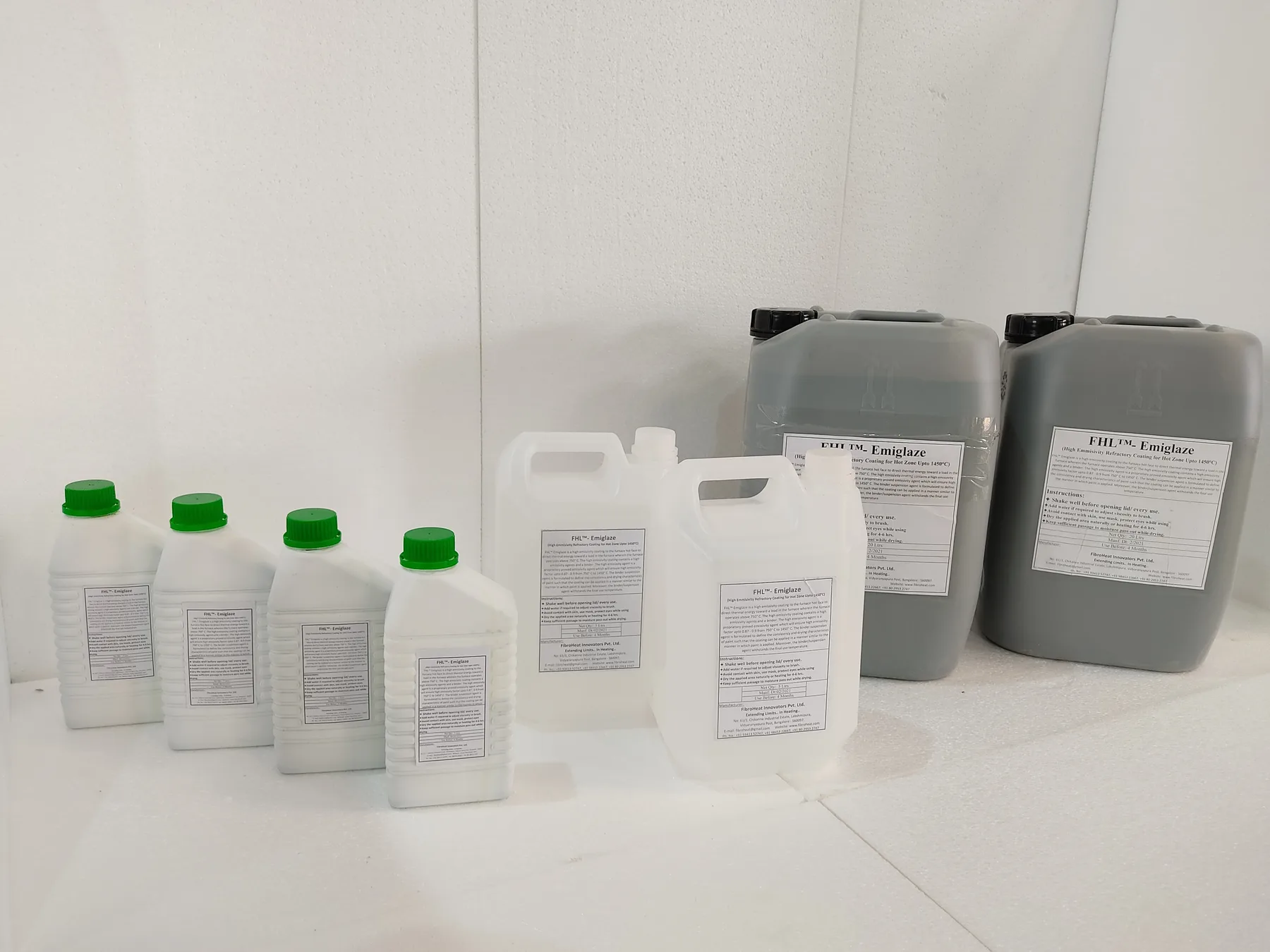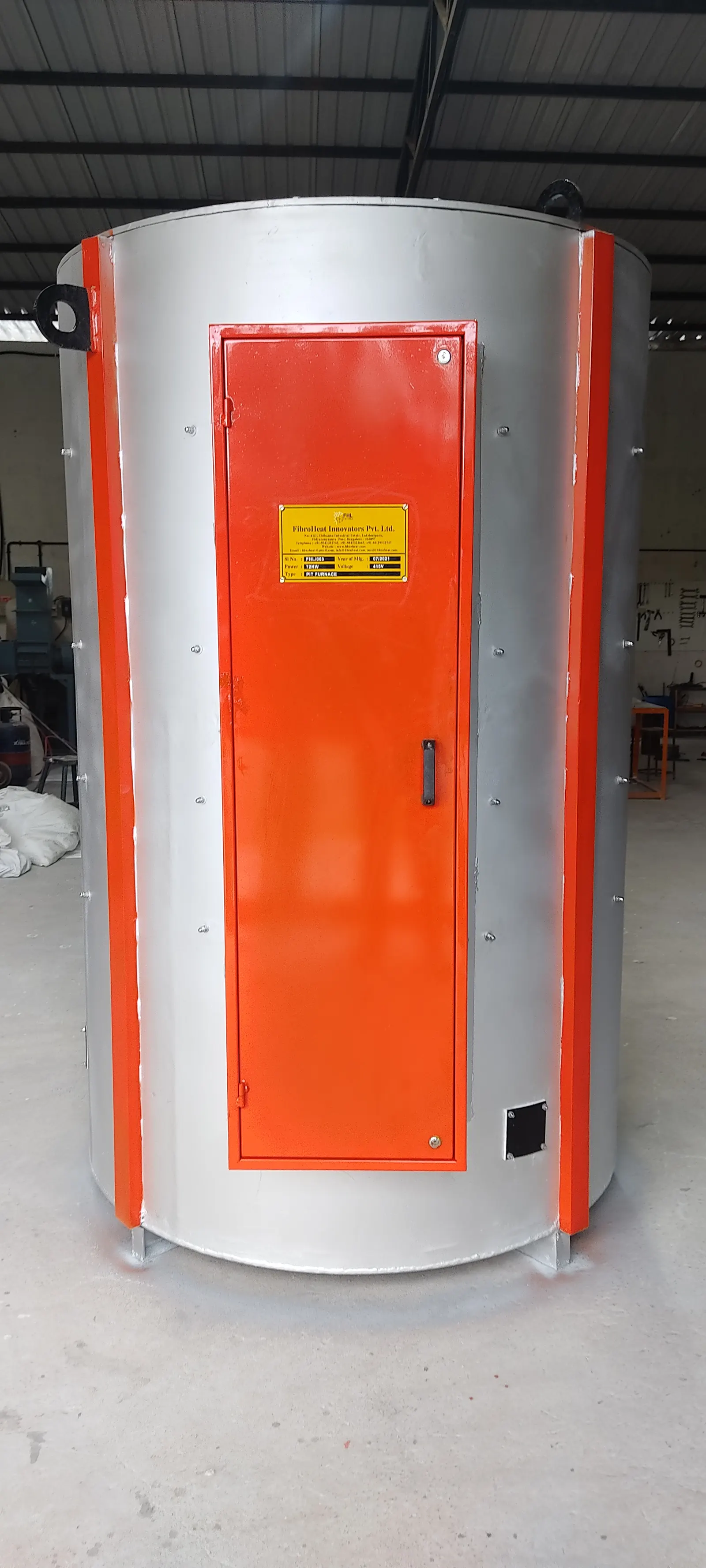
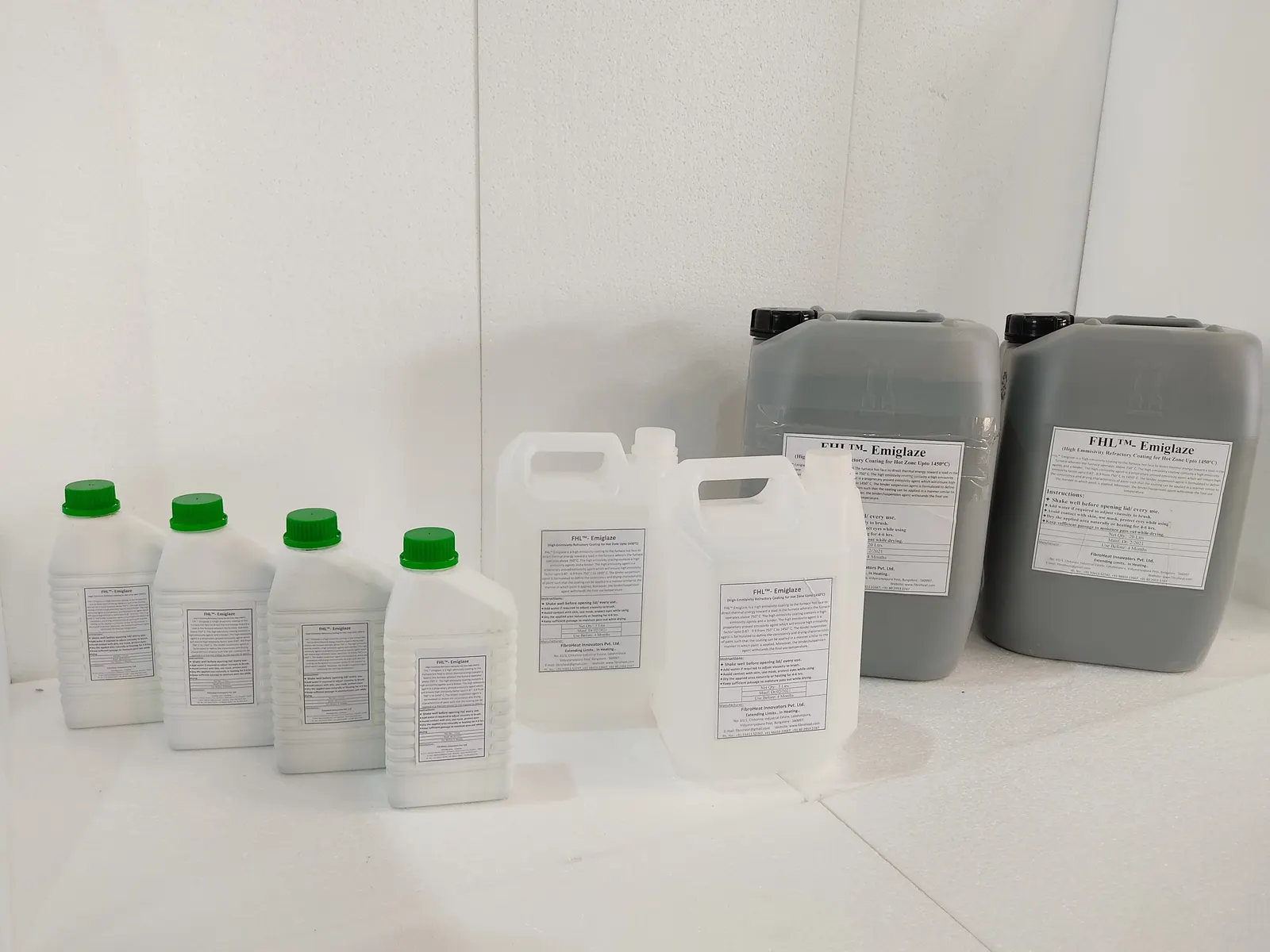
Every efficiency measure on a high-temperature furnace has to respect one physical fact: above roughly 800°C, radiation takes over as the dominant heat-transfer mechanism inside the chamber, and the advantage grows steeply from there — a black surface at 1200°C radiates roughly 3.5 times the flux it emits at 800°C, because radiant output scales with the fourth power of absolute temperature. That makes the emissivity of every internal surface a design variable rather than a fixed material property. In most chamber furnaces the wall and roof area facing the load is also larger than the load surface itself, so wall behavior shapes a large share of the radiant exchange. Bare refractory and ceramic fiber surfaces emit only moderately in the infrared bands that matter at furnace temperatures — typically 0.4–0.7 — so part of the burner or element energy falling on the walls is absorbed and conducted away through the lining, or leaves with the flue gases, instead of reaching the charge. FHL® Emiglaze is FeroHeat's high-emissivity thermal coating, engineered to tip that balance back toward the load on new linings and relines alike. The effect compounds with low thermal mass: a lining that stores less heat and re-emits more of what it absorbs attacks the two largest losses of a batch furnace at once. Emissivity sits in every furnace heat balance, whether the designer wrote it there or not.
What is a high-emissivity coating, and how does it work?
Emissivity is the ratio of a surface's radiant emission to that of a perfect blackbody at the same temperature, expressed on a scale from 0 to 1. Net radiant exchange between a hot wall and a cooler load grows with the effective emissivity of the surfaces and with the fourth power of absolute temperature — the Stefan–Boltzmann law. A high-emissivity coating is a thin, refractory-based layer applied to the hot face that raises surface emissivity to roughly 0.85–0.95 (typical). The coated wall absorbs furnace radiation efficiently and re-emits it toward the charge, instead of letting that energy soak deep into the insulation. Two effects compound. First, the load receives more radiant heat per unit time, so heat-up is faster and temperature distribution across the chamber is more uniform. Second, less heat enters the wall itself, so the temperature gradient through the lining flattens and shell losses fall. On ceramic fiber modules the coating does a third job: it glazes and hardens the hot face, reducing fiber erosion and dusting where gas velocity would otherwise slowly strip the surface. View factors and geometry matter too, but emissivity is the one variable you can change on an existing furnace without rebuilding it — which is what makes a coating a retrofit tool rather than a design luxury. Raising hot-face emissivity also reduces the wall's demand on the burners or elements for a given load temperature, which is why coated furnaces hold setpoint with steadier, lower input.
How much energy can a high-emissivity coating save?
For planning purposes, expect typical savings of 5–15% in radiant-dominated furnaces operating above 1000°C, with the hottest furnaces and the lowest initial emissivity at the top of that band. Fuel-fired furnaces benefit twice over: better wall re-radiation reduces both the heat absorbed by the lining and the energy carried out by the flue gases, while electric furnaces see the gain mainly as shorter heat-up and steadier setpoint holding. Below roughly 800°C, convection does most of the work and the case for coating weakens accordingly. Treat these figures as typical, not guaranteed: the honest number for a given furnace comes from metering fuel or power per charge before and after coating, at constant product mix and cycle. That measurement is exactly what a FeroHeat energy audit structures — a loss breakdown across walls, stored heat, openings, exhaust, and control behavior, with coating ranked against lining upgrades, element improvements, and controls, each carrying an estimated saving and payback. Coating usually sits among the lowest-cost measures on that ranked list, and among the easiest to implement during a scheduled outage. Better uniformity has its own economic value too: fewer rejected loads and shorter soak corrections. Coatings also compound with a low-mass lining: the less heat the wall stores, the more every additional watt re-radiated from the hot face goes to the load rather than into reheating the lining on the next cycle.
Coated vs. uncoated hot face — typical values for a high-temperature furnace wall (illustrative)
| Parameter | Uncoated refractory or fiber face (typical) | With FHL® Emiglaze (typical) | Effect on the furnace |
|---|---|---|---|
| Surface emissivity in furnace IR bands | ~0.4–0.7 | ~0.85–0.95 | Wall re-radiates more heat toward the load |
| Heat-up time on a batch cycle | Baseline | Typically 5–15% shorter above 1000°C | More radiant flux to the charge per unit time |
| Heat absorbed into the wall | Higher — energy soaks into the lining | Lower — re-emitted toward the chamber | Flatter gradients, lower shell losses |
| Fiber surface condition | Exposed fibers erode and dust under gas velocity | Sealed, hardened hot face | Longer lining life, cleaner chamber |
| Load temperature uniformity | Baseline | Improved — walls radiate more evenly | Less variation across and within the load |
| Added thermal mass | Not applicable | Negligible — the layer is thin | The low-mass lining keeps its fast response |
Where do high-emissivity coatings deliver the biggest gains?
- High-temperature furnaces above 1000°C, where radiation dominates and the fourth-power relationship amplifies every emissivity point gained.
- Batch furnaces with radiant heating, where faster heat-up directly shortens cycle time and raises throughput per shift.
- Heat-treatment duty — normalizing, hardening, tempering, annealing — where load-to-load temperature uniformity is a quality requirement, not an extra.
- Gas- and oil-fired furnaces, where improved wall re-radiation cuts the energy leaving with the flue gases and shortens recovery after charging.
- Fiber-lined walls and roofs under moderate gas velocity, where the coating doubles as erosion protection for the hot face and cuts fiber dusting into the product.
- Relines and retrofits, where coating the new lining during installation captures the full benefit from day one at marginal extra cost.
How is FHL® Emiglaze applied, and how does it fit an efficiency program?
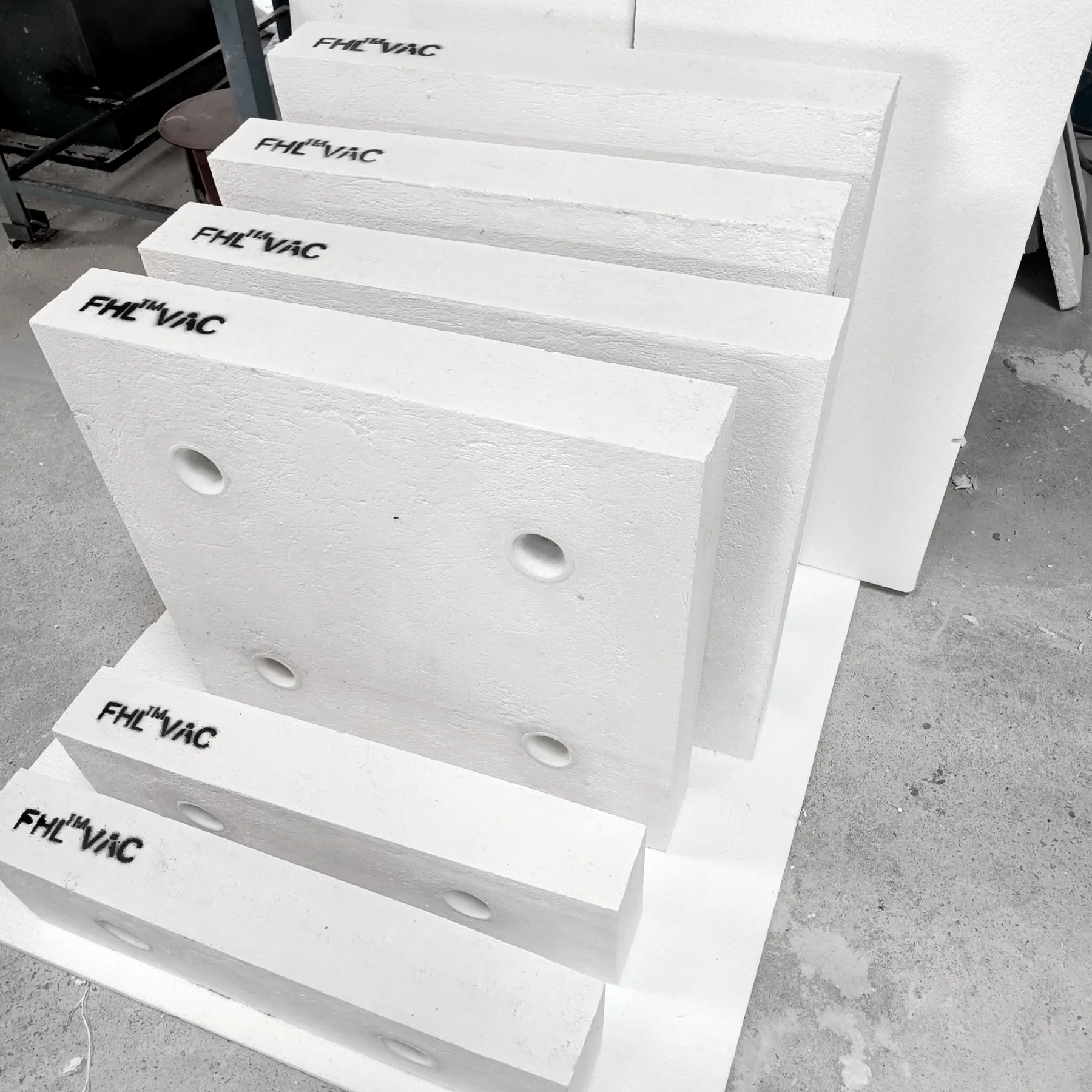
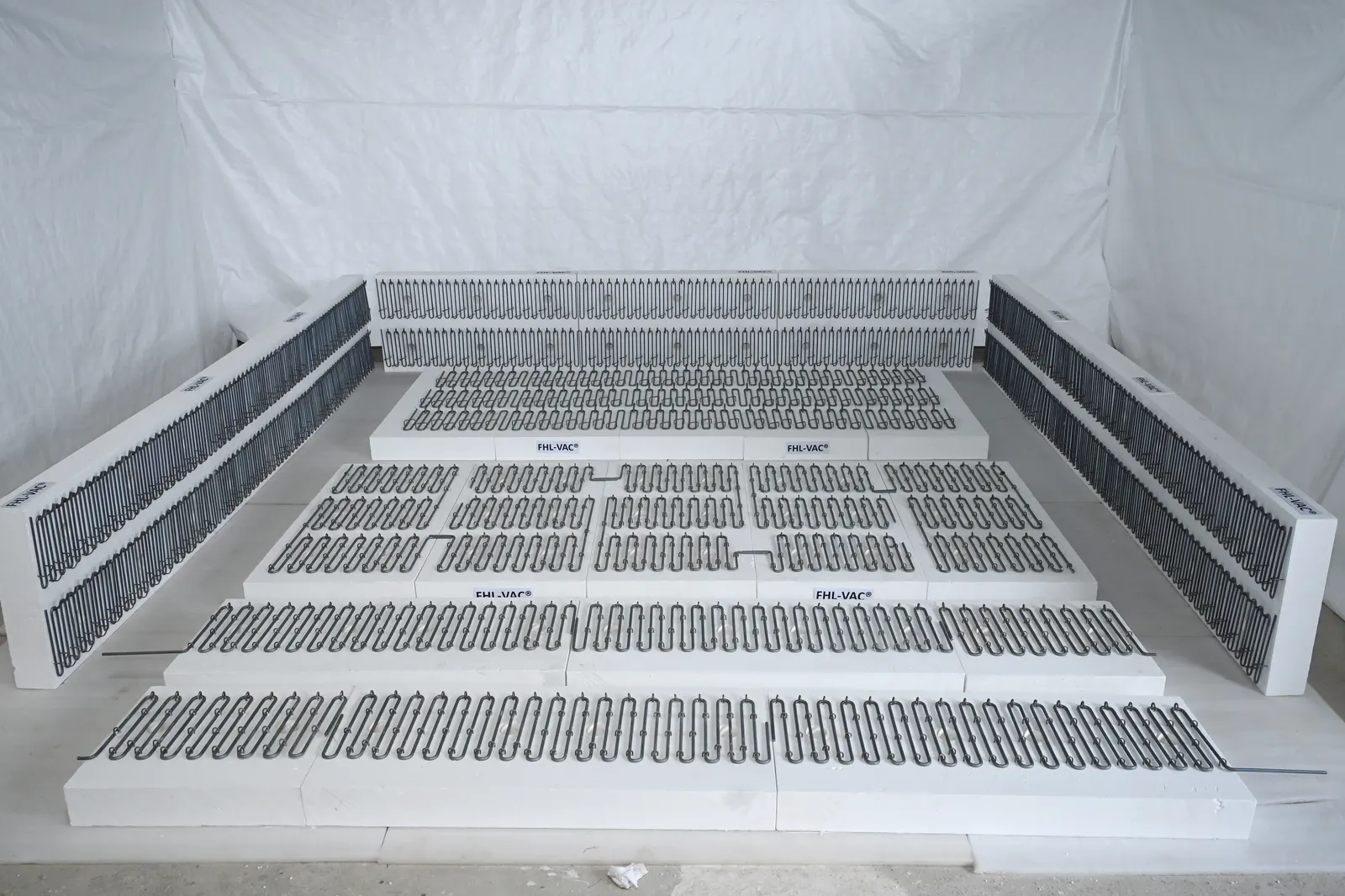
FHL® Emiglaze is supplied as coating material for application over clean, sound refractory, castable, or ceramic fiber hot faces, by brush or spray, with application guidance available on request. Surface preparation decides adhesion: loose fiber, dust, and friable refractory must come off first, because the coating bonds to the surface it touches, not to the lining beneath. The layer is thin, so it adds negligible thermal mass and does not compromise the fast heat-up and cool-down of a low-mass lining. In service, inspect the hot face at planned outages and touch up wherever mechanical damage or erosion exposes bare fiber; recoating during a reline adds little scope, since the lining is already exposed. The coating partners all three FHL-VAC® grades — FHL-M 1150, FHL-Z 1325, and FHL-HT 1550 — covering continuous duty to 1550°C. Treat it as a multiplier inside a complete efficiency strategy, not a substitute for sound lining design: low-mass FHL-VAC® modules cut stored-heat and transmission losses, correctly specified FHL® heating elements deliver the power, CFD simulation verifies uniformity before firing, and the coating maximizes the share of radiation that actually reaches the load. Because the coating is inorganic and bonded to the fiber or refractory, it ages with the lining rather than flaking like a paint; erosion, not chemistry, is usually the life limiter. Coat a tight, well-engineered lining and the gains add up; coat a leaking, degraded lining and you are painting over the real problem. For plants working through an audit, lining integrity comes first — but coating is often the measure with the shortest interruption to production. To specify a coated lining for your furnace, share the furnace type, operating temperature, atmosphere, and fuel or power data at info@feroheat.com or +91 93413 52747.
Key takeaways
- Above roughly 800°C, radiation dominates heat transfer inside a furnace, so the emissivity of every wall and roof surface becomes a first-order efficiency variable.
- A high-emissivity coating raises hot-face emissivity from a typical 0.4–0.7 to roughly 0.85–0.95, so walls re-radiate heat to the load instead of absorbing it into the lining.
- Because radiant transfer scales with the fourth power of absolute temperature, coatings earn their largest savings above 1000°C — typically 5–15% in radiant-dominated furnaces.
- FHL® Emiglaze also seals and hardens ceramic fiber hot faces, cutting erosion and dusting and extending the service life of the module lining beneath it.
- A coating multiplies a sound lining but cannot rescue a failed one — reline first, then coat.
- On a FeroHeat energy audit, coating typically ranks among the lowest-cost, fastest-payback measures, applied in a scheduled outage as the standard finishing coat over FHL-VAC® modules.
Frequently asked questions
Do high-emissivity coatings really save energy?
Yes, provided the furnace is radiant-dominated and the lining is sound. Raising hot-face emissivity increases the radiant heat delivered to the load and reduces absorption into the wall; typical savings are 5–15% above 1000°C. Confirm on your own furnace by metering fuel or power per charge before and after coating.
At what temperature do high-emissivity coatings start working?
They work at any temperature, but the payoff scales with the fourth power of absolute temperature, so gains become significant where radiation dominates, roughly above 800°C, and largest above 1000°C. Below that range convection does most of the work and emissivity changes matter far less.
Can you apply a high-emissivity coating over ceramic fiber modules?
Yes — that is one of the best uses. FHL® Emiglaze is applied by brush or spray over clean FHL-VAC® modules, raising hot-face emissivity while sealing and hardening the fiber against erosion and dusting. The thin layer adds negligible thermal mass, so the lining keeps its fast heat-up and cool-down.
How long does a high-emissivity coating last on a furnace wall?
Service life tracks the lining beneath it and the severity of gas velocity, dust, and mechanical contact at the hot face. Inspect at planned outages and touch up wherever damage exposes bare fiber; recoating during a scheduled reline adds little scope because the lining is already exposed and accessible.
Is a coating enough, or does the lining need upgrading too?
A coating multiplies a sound lining; it cannot rescue a failed one. If the wall leaks through open joints or has lost thickness, reline first, then coat — FeroHeat's relining service includes the FHL® Emiglaze finishing coat. An energy audit will rank coating against lining work by saving and payback.
Written by the FeroHeat Engineering Team. Technically reviewed by Pranesh Kumar, Technical Director.